Thursday, February 21, 2013

First Rock and Roll Song Ever? Tell Us...


The staff at Monahanssong recently started debating which song deserved credit among all the many that are out there as "The First Rock and Roll Song Ever". Many of the usual suspects surfaced, so there was consensus that "Rock Around the Clock" by Bill Haley and His Comets deserved consideration, as did "Saturday Night Fish Fry" by Louis Jordan which was featured in this blog in August 2012.

Our further research shows that there is heated debate through the years as to what song deserves the honor, and even the criteria for judging is not fully agreed upon. We are never afraid to wade into debate and would invite you to join the fray...

What song do YOU think deserves credit? Let us know and we will publish the list as well as provide you with a selection of experts choices as well as our own pick for "The First Rock and Roll Song Ever." #monahanssong


Friday, February 15, 2013

Interview: "Little Mike" Markowitz, Little Mike and the Tornadoes.


Monahanssong caught up with "Little Mike" Markowitz in Jacksonville, where he was playing a two night gig with his Tornadoes at Ragtime. Mike and his band were (and still are), a consummate workhorse blues bar band that earned a major league east cost reputation for high energy "Chicago Style" blues. The band, who plays more local dates now describes themselves as a "working class band" that always played the blues with a rock n' roll edge to it. No argument there... Little Mike and the Tornadoes latest release "Forgive me" will be critiqued in our next post. The also have a must attend event coming up in Jacksonville on February 23rd!
 
Monahanssong: You write a lot more than you get credit for.  Most of the songs on your latest CD “Forgive Me” have original lyrics. What is your writing process? Lyrics firs,t then the music, or otherwise?

Little Mike: It varies. Usually a melody or bass lines will come to me and then I find words to it. Sometimes everything comes at once. There is no deliberate process; I never try to write a song. They either come or they don’t.

Monahanssong: My impression over the years of seeing and listening to you play harp is that you are all about wood Hohner harmonicas. A lot of people are playing resin (plastic) harps today. Give me your thoughts on that…

Little Mike: I’ll be honest: I don’t know what a resin harp is! I only use the Hohner Marine Bands.
 
Monahanssong: You know some of the Delta and Chicago guys soaked their wood harps overnight in the old days. They had to shave off the swelled wood to play, and the harps were ruined when they dried again, but they got great sound.  Modern harp players have had pedal or amp reverb for a long time and that replaced the need, but did you ever try it? Regardless, how do you get your unique sound?

Little Mike: I tried a petal for a tour or two trying to be modern,but for the last 25 plus years I use a harp, astatic mic, and a Fender Bassman which has no reverb, but 4 ten inch speakers. It sounds just the way I like it. I don’t soak the harps or anything else. I try to get my tone from using my diaphragm rather than my throat. I also tongue block to get that big fat sound that I like.

Monahanssong: Your amp rang a bell the other night when I saw the band. I think you have had it a long time.  Am I correct that the one you are using now doesn’t owe you a dime?

Little Mike: I owe it! My Fender Bassman has been with me longer than my wife. At least 30 years and it is the best sounding amp I ever had. It has more than 1,000,000 miles on it!

Monahanssong: You have a new CD, “Forgive Me” being released this month, and a rather special event coming up in Jacksonville on February 23rd. Tell us about it.

Little Mike: We will be having our official CD Release Party for Jacksonville at European Street  (5500 Beach Blvd.) with special guest harmonica wizard Willie Green. You can find info about Willie at: http://williegreenblues.com/
 

Our release, “Forgive Me”, is our 9th nationally distributed recording dating back to 1988. It has a very traditional sound and is all original. People who like real blues will love it. Our website is: http://littlemikeandthetornadoes.com/fr_home.cfm

Saturday, February 9, 2013

Professor Longhair: "Big Chief" (1964,1980)


It is Carnival Time! Mardi Gras & Fat Tuesday are happening and there is no better way to mark the event than featuring the great music of Professor Longhair.

Professor Longhair (Henry Roeland Byrd), also known as Roy "Bald Head" Byrd and also as Fess was born on December 19, 1918 in Bogalusa, Louisiana. He did not learn to play piano (self-taught) until he was in his 30's and even then it was on a piano with missing keys. Many say this helped him shape his style of playing which has Afro-Cuban influences and is also referred to as "rumba-boogie". This really comes through in "Big Chief" which was written by the great Earl King but covered by Longhair in 1964. Much was made of the addition of horns to the composition and it was a New Orleans hit for many years. It is stll a Mardi Gras favorite much like his other signature songs like "Mardi Gras in New Orleans" and "Tipitina".

Fess would fade away for many years and would work as a custodian to help make ends meet before claiming fame again.

How did the "new Longhair" happen? He got on the roster for the 1971 New Orleans Jazz and Heritage festival which led to his playing the Newport Jazz Festival in 1973. He would play at a party Paul and Linda McCartney were throwing on the Queen Mary in 1978 which was recorded and released. His fame was ensured with the release of the album Crawfish Fiesta (1979), which was a big seller for Alligator Records,

To us, the whistling, which is part of many of his songs, really stand out on his 1980 version from Crawfish Fiesta, and is therefore our favorite. The song is about the African-American tradition of dressing as decked out Indians for their Mardi Gras Parade. Indians used to hide slaves and this is a nod to their heroism. The "Big Chief" is the leader.

Me got fire, can't put it outHeap fire water gonna make me shoutI'm goin' down an-a get my squawMe might buy a great big carI'm gonna do ev'rything I couldMe Big Chief, I'm feeling good
Me Big Chief, I got um tribeGot my squaw right by my sideMy Flagboy, he just went byMy Spyboy, he's full of fireMe whole tribe is havin' funWe gonna dance 'til mornin' come
In 1980 he would pass away during the filming of a documentary he was starring in.Crawfish Fiesta shipped out to stores the very day he died.

He lived his last years as a very famous man in New Orleans and today, 32 years after his death he is 
justly worshipped as a founding father of New Orleans R&B. He is a member of the Rock & Roll Hall of Fame.

Two versions here. The 1980 Crawfish Fiesta version of "Big Chief" and the original from 1964:


Monday, February 4, 2013

Ed Sheeran: "The A Team" (2011)

UPDATE: Since this post was published, Ed Sheeran's "The A Team" went as far as #16 on the Billboard Hot 100 Chart. Well done. A great song with a meaningful story. Nice to see it have legs in the U.S.!!


(Originally posted July 2012)


"The A Team" is a song by English singer-song writer Ed Sheeran .The song was sung by Sheeran, following a last minute performance at an event for the homeless. "The A Team" became a top 10 hit in Australia, Germany, Ireland, Japan, Luxembourg, New Zealand, Norway, the Netherlands and the United Kingdom. The U.S.? Nobody noticed...
You may have seen him perform at the closing ceremonies of the 2012 Summer Olympics singing Pink Floyd's "Wish You Were Here".


Jimmy Wayne: Sara Smile (2009), Hall and Oates (1976)

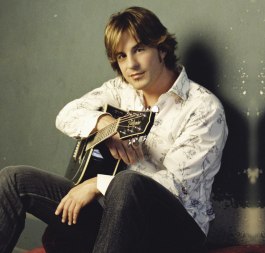
Agent and agency for booking and hiring Jimmy Wayne
An amazing story here, so pay attention...Jimmy Wayne (Barber) was born on October 23, 1972 in Kings Mountain, North Carolina. His father abandoned Jimmy and his sister who were in and out of foster care or sometimes in the streets when their mother would disappear or do time. Jimmy would eventually move in with an elderly couple down the street from where he lived after mowing their lawn. He would complete high school and get an associates in criminology while working as a prison guard. He learned some of his songwriting skills from an inmate. Years later he would try his luck and moved to Nashville.

His songwriting caught on and the DreamWorks label signed him up with a debut album in 2003 that made it to #7 on the country charts. The album featured "Stay Gone" which was inspired by his sister Patricia who, according to a Wikipedia entry said: " Everything would be better if her husband would just stay gone." 

His next album would do even better, reaching #4 on the country charts.

In 2009, Jimmy Wayne released Sara Smile which was the title song and cover. Daryl Hall and John Oates originally did the song (reaching #4 on the charts in the U.S.) and provided backing vocals for Jimmy on the song.

The song  was written about Hall's girlfriend, flight attendant and future songwriting collaborator Sara Allen.

"Sara Smile" as a single would reach as high as #31. Many country critics panned it for not being a country song. One wonders why it did not cross over to other charts.

The song is exceptional for a cover, and Jimmy's vocals absolutely nail the sentiment conveyed in the lyrics:

Baby hair, with a woman's eyes,
I can feel you watching in the night,
All alone with me, and we're waiting for the sunlight,
When I feel cold, you warm me,
And when I feel I can't go on, you come and hold me,
It's you, and me, forever...


According to the Great American Country (GAC) Blog:


“I’ve had a lot of friends who… I lived in group homes with that ended up dead,” Jimmy said during a press conference at Monroe Harding, a Music City facility for at-risk kids. “When I worked in prison as an officer, I had a lot of friends come in as convicts. I had a foster brother who I spent half of my life with come in as a convict. It was a very hard experience seein’ that stuff.”
In 2010, Jimmy completed a 1600 mile walk between Nashville and Phoenix called "Meet Me Halfway" to promote awareness of homeless youth. He broke an ankle but made the trek. He continues to champion foster care issues.
Three versions to peruse here. The first is the official video of Sarah Smile by Jimmy Wayne. The second is a banjo free gem that doesn't pander as much to country with Daryl Hall sitting in. The third is the original cut by Hall and Oates off of their first self titled album.

Special thanks to Trish Norton Lindsay for the suggestion.


Tuesday, January 22, 2013

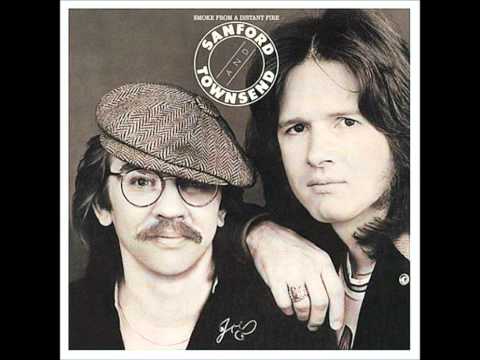
Sanford-Townsend Band: "Smoke From a Distant Fire" (1977)


This song has pretty much disappeared from the airwaves. I think you will find the beat, amazingly strong vocals by John Townsend, and a first rate horn arrangement well worth your while. This is another example of a great song birthing a band and it would be their greatest achievement. This is how two Alabama boys working in L.A. made good.

According to Songfacts.com,  This is how the song "Smoke From a Distant Fire" came about (as told by John Townsend).  "In the Spring of 1974, Ed Sanford and I had just signed a publishing deal with Chappell Music. They gave us a nice advance and a weekly stipend and for a couple of unknown writers, this was a rare deal. Ed and our friend Steven Stewart (co-writer on Smoke...) were sharing one half of an old duplex in Hollywood at the time. I used to drop by and hang out, write or whatever, almost on a daily basis. Now Steven was an aspiring classical guitarist at the time. He used to stay up 'til the wee hours, sometimes daybreak, bent over his music stand practicing his scales, or some classical piece."


"Steven was driven to become a great player. I was over one morning as Ed was just waking up and Steven hadn't been to bed yet. Ed was complaining about not getting any sleep and barked at Steven, 'When are you gonna stop wasting your time on that classical crap and write something that will make you some money.' Steven picked up his guitar immediately and started playing what I thought was a really cool R&B type rhythm and replied with 'Anybody can write that crap.' I said, 'Apparently you just did' and went straight to the piano and embellished on his idea. While going through some old song ideas in my notebook I always carried, I found one that actually was the title of a poem that Ed had written while in college. I extracted the title because it seemed to be a perfect fit for the chorus idea I had and that all sort of amalgamated into Smoke From A Distant Fire."

You left me here on your way to paradise
You pulled the rug right out from under my life
I know where you goin' to I knew when you came home last night
'Cause your eyes had a mist from the smoke of a distant fire

Lord, I was stunned shoulda' seen it come a long time ago.
When I realized the reality gave me a roll
If things are the same then explain why your kiss is so cold
And that mist in your eyes feels like rain on the fire in my soul

"Smoke From a Distant Fire" was no fluke. The song was professionally done at the famous Muscle Shoals Studios with the legendary Jerry Wexler producing and members of Loggins and Mesina's band sitting in. Kenny Loggins would lend vocals a track on the same album called "Oriental Gate" The band had also worked with Michael McDonald, so it becomes easy to see how this song seems to be the standard bearer of late '70's blue-eyed soul.

In an Amazon review of the album, consumer review states: "If you took Firefall,Seals and Crofts and Orleans put them into the same studio you would have the same general sound and feeling this album generates. The title track "Smoke from a Distant Fire", is an upbeat tune which tells the story of love rejected and illustrates the old saying "What goes around, comes around". Nothing violent or anything of that nature, more simply stated the grass is not always greener on the other side." 

The Sanford-Townsend Band would open for Fleetwood Mac on their historic Rumors tour and they would also play with The Marshal Tucker Band, Foreigner and Charlie Daniels.

The band would release two more albums after their self titles first album and they would not do well. Sanford and Townsend went back to the studios and played backing for others and continued to write.Ed Sanford would write "I Keep Forgettin'" which would be a big song for Michael McDonald in 1982.

Two versions offered here. The first is their performance on Burt Sugarman's Midnight Special. This version let's you "see" how powerful Townsends vocals are. The second is right off of their 1977 album.


Saturday, January 12, 2013

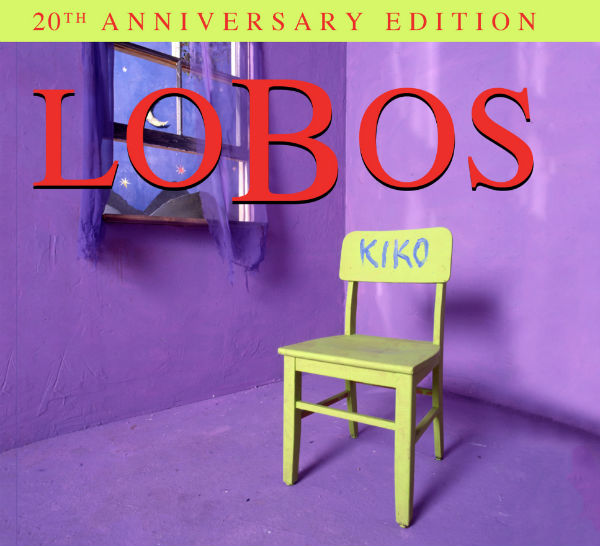
Los Lobos: Kiko and the Lavender Moon (1992)


I'm a little bit more on my own with this song post. There seems to be less background on this song than many others I have highlighted.

But then again, that is the point. Here we have yet another underappreciated song by a underrated band.

Los Lobos got started when David Hidalgo and Luis Perez met in hign school in East L.A.(1973). They both liked the same music which included Ry Cooder and Fairport Convention. Music that was not being listened to by their peers. With the addition of schoolmates guitarist Cesar Rosas and bass player Conrad Lozano they started playing top 40 sets around town.

Having tired of the same songlist, the band started melding Mexican, rock and blues into their own music. They would be joined by Steve Berlin, formerly of the Blasters and have been together ever since.

In 1984 they recorded "How Will the Wolf Survive" to wide acclaim. While based on a National Geographic peogram, the title song reflects aspects of their struggling to maintain their cultural music heritage while trying to make it as an American rock band.

In 1987, They would record the Richie Valens covers for the soundtrack of La Bamba. The title song leapt to number one on the charts. For my money, their cover of Jesse Belvin's 1956 hit "Goodnight My Love" is as good as it gets.

Los Lobos would go on to make many albums but would always have the rap that they never had a "hit" that was not a cover. "How Will the Wolf Survive " charted no higher that #78.

They did win some grammy's and can be found on a wide array of soundtrack and special recordings. Notable is their cover of the Little Bob song "I Got Loaded" used in the movie "Bull Duram" and their outstanding version of the Grateful Dead's "Bertha" on the album "Deadicated". 

The band continues to receive critical acclaim, good reviews and possesses a rabid fan base. They remain true to their own brand of music. Thats where "Kiko and the Lavender Moon" comes in.

One might feel upon listening to this track off of their 1992 album "Kiko", that it was a good fit in our Halloween song contest. It has a spooky feel to it and yey the melody and lyrics help you embrace it for what it is. A man flying in the face of reality.

Daytrotter.com had this take on the song:

"Kikoand the Lavender Moon," a song from Los Lobos' 1992 album, "Kiko," sounds like it's a period piece, or a song that's rooted in a year that only current grandmothers and grandfathers remember. It has the feel of a place that we cannot easily get to any longer. It could be virtually impossible, even, a visage of a bygone time or of simple loss. It sounds as if it's from a time when, if you were hungry, you were thin and not the opposite. It seems to come from a place, or a night that's newly arrived - with the red and yellow pepper colors are getting pushed under the horizon by a hue more characterized by ravens and the abyss. It comes from a place at night when the ashtrays have the first blanket of cigarette ash, the joyful sound of caps popping off the tops of bottles is like music, people have gathered and there's a strong aroma of a big family-style dinner wafting out of the kitchen window, into the backyard. Guys are walking around a backyard that's been draped with cheap, hanging lanterns giving off the faintest of dappled light, the grass is a poor excuse for a lawn, now mostly just worn into a dusty, dirty tract. They carry two fistfuls of beer bottles - the glass of three or four bottles pushed tightly together in a muted clink and a deliberate, but brisk walk from the ice-filled trough back to the gang of empty-handers, his responsibility officially almost fulfilled.

Louis Perez stated in an interview that the song eminated from childhood memories of his home and his mothers altar on a dresser.  He stated, "There's a point where all songwriters fall into this vacuum where it seems so amorphic and almost surreal...all of us were on this crazy trip. It was like a canoe lost in the fog, all of us right there paddling away, and knowing we just have to paddle. We don't no where we are going, but trusted it."

"He always sleeps
Till the sun goes down
He never wakes
Till no one's around
He never stops
Can't catch his breath
It's always there
Scares him to death"

I offer two versions here. The first is an intimate version in a studio where the horns are replaced by keyboards, and the second is the official video for the song. A deluxe reissue of Kiko was released last year.